Factories across Pakistan lose production hours to cleaning — scrubbing, chemical washes, dismantling machines. Dry ice blasting offers a radically faster alternative: it cleans with frozen CO2 pellets, leaves no residue, uses no water, and often needs no disassembly. Here is how it works, where it is used, and how to get the right pellets for it in Pakistan.
What Is Dry Ice Blasting?
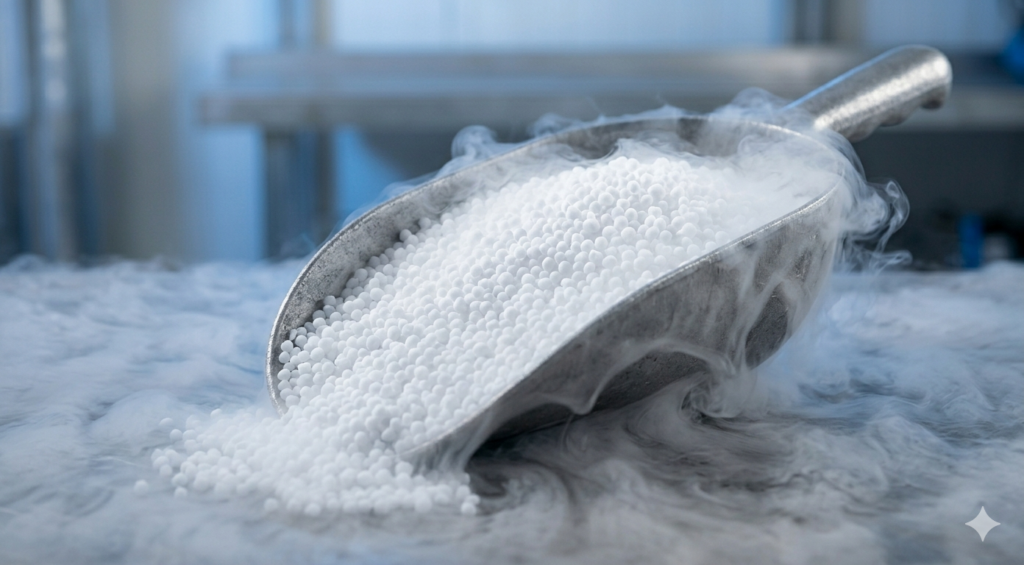
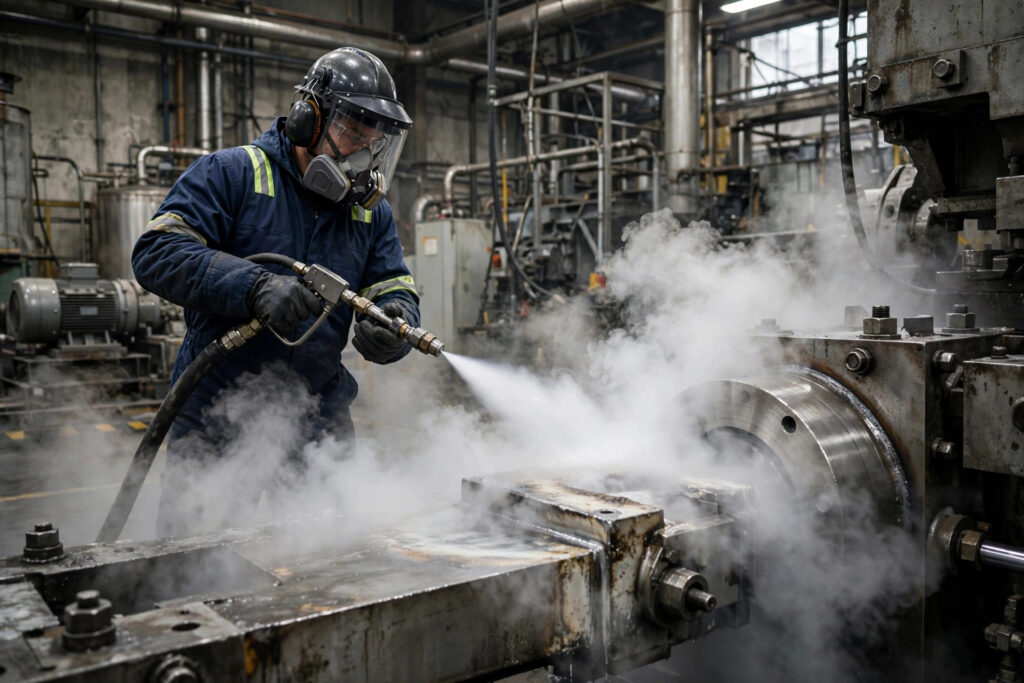
Dry ice blasting is an industrial cleaning method that fires 3mm dry ice pellets at high speed using compressed air — similar in concept to sandblasting, but with a frozen twist. When a pellet strikes a dirty surface, three things happen at once:
- Kinetic impact — the pellet chips and cracks the contaminant layer.
- Thermal shock — at minus 78.5°C, the pellet flash-freezes the dirt, grease, or paint, making it brittle so it breaks away from the surface.
- Sublimation lift — the pellet instantly turns to CO2 gas on impact, expanding nearly 800 times in volume and lifting the debris off the surface.
The result: the contaminant falls away, and the pellet simply disappears into gas. No secondary waste, no abrasive media to sweep up.
Dry Ice Blasting vs Traditional Cleaning Methods
Against Sandblasting and Shot Blasting
Abrasive blasting erodes the surface it cleans and leaves piles of spent media. Dry ice blasting is non-abrasive — it cleans without wearing down the substrate — and leaves nothing behind to dispose of.
Against Chemical Cleaning
Solvents need rinsing, create hazardous wastewater, and demand downtime for drying. Dry ice blasting is dry: equipment can often go straight back into production.
Against Manual Scrubbing
Hand cleaning is slow and inconsistent. A blasting unit cleans large surfaces in a fraction of the time, reaching crevices hands cannot.
Where Dry Ice Blasting Is Used in Pakistan
Food and Beverage Plants
Bakeries, dairy processors, and bottling plants use dry ice blasting to strip baked-on grease, flour, and residues from ovens, conveyors, and mixers — without water near electrical panels and without stopping production for long.
Automotive and Workshops
Engine bays, underbodies, and molds come clean without disassembly. Workshops in Lahore’s Montgomery Road market and Karachi’s SITE area use it for detailing and restoration jobs.
Printing and Packaging
Ink buildup on printing presses dissolves under dry ice blasting, restoring print quality with minimal press downtime.
Mold Remediation and Restoration
Mold, soot, and fire-damage residues lift off wood, brick, and concrete. Restoration contractors use it after fires and floods.
Electrical and Power Equipment
Because the process is dry and non-conductive, motors, switchgear, and transformers can be cleaned in place — something water-based methods cannot do safely.
What You Need for Dry Ice Blasting
- 3mm dry ice pellets — the standard blasting media; consistent pellet size gives consistent cleaning.
- A blasting machine and compressed air — available from industrial equipment suppliers; many contractors offer blasting as a service.
- Fresh pellets — pellets sublimate fast, so they should be made or delivered close to the job date. Stale, shrunken pellets clean poorly.
Safety Rules for Dry Ice Blasting
- Ventilation is mandatory — blasting releases large volumes of CO2; work in ventilated spaces and monitor air quality in enclosed areas.
- Full protective gear — face shield, ear protection (it is loud), insulated gloves, and protective clothing. Pellets at high speed can injure skin and eyes.
- Never point the nozzle at people or animals.
- Trained operators only — pressure, nozzle distance, and pellet feed rate all affect results and safety.
Dry Ice Blasting Economics: Is It Worth It?
The pellets cost more per kg than blocks, but the economics favor blasting when you count the full picture: far less downtime, no chemical purchase or disposal costs, no water treatment, and longer equipment life (non-abrasive cleaning does not wear machines). For plants that clean weekly, the payback is usually measured in months.
How to Source Blasting Pellets in Pakistan
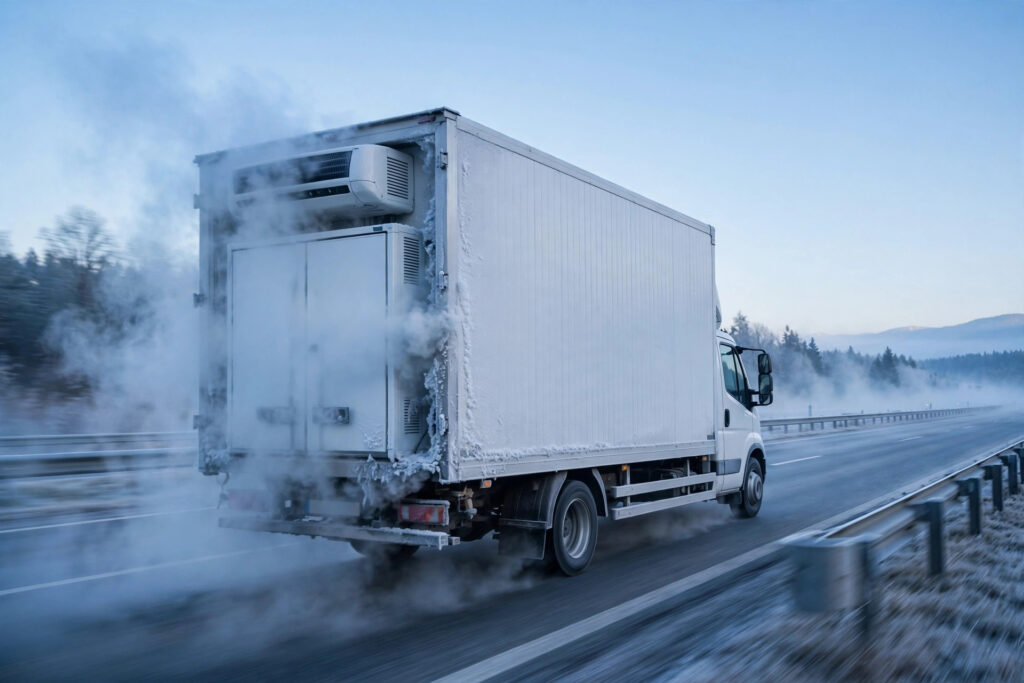
Not every dry ice seller stocks proper 3mm blasting pellets — some sell irregular nuggets that jam machines. Ask your supplier specifically for uniform 3mm pellets, confirm they are produced fresh for your job date, and arrange insulated transport so they arrive at full size. For recurring industrial use, a scheduled supply arrangement beats ad-hoc ordering.
Frequently Asked Questions
Does dry ice blasting damage surfaces?
No — it is non-abrasive. Unlike sandblasting, it does not pit or erode metal, and it is safe on delicate surfaces like electrical components and food-grade equipment when operated correctly.
What is left to clean up after dry ice blasting?
Only the removed contaminant itself (paint flakes, grease, dirt). The blasting media vanishes into CO2 gas, so there is no spent abrasive to collect.
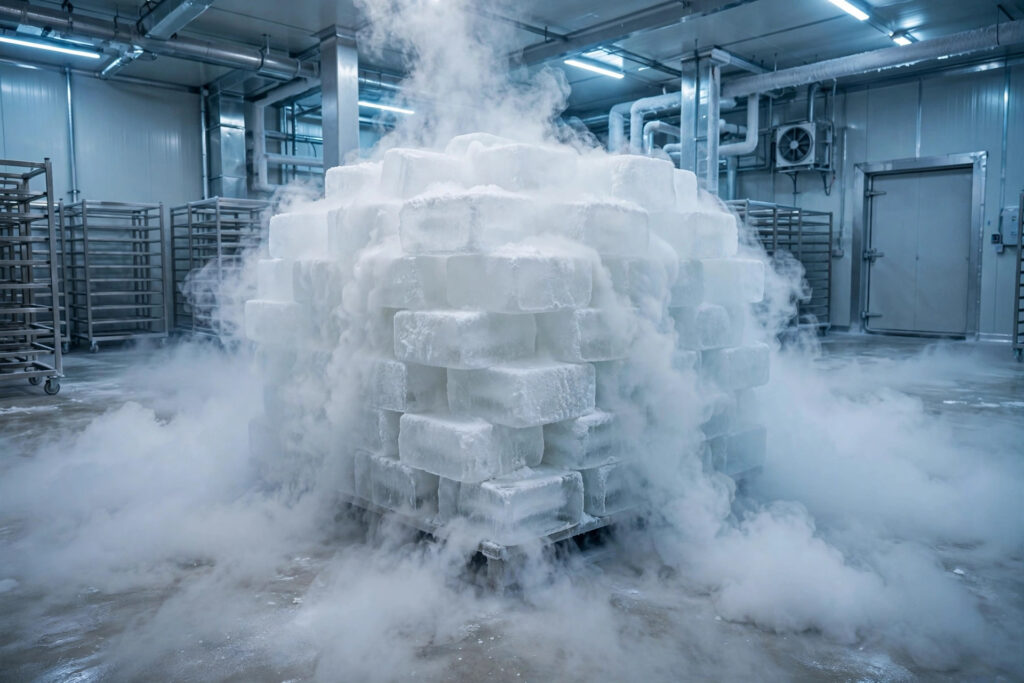
Can I blast with dry ice blocks instead of pellets?
No. Blasting machines are designed for uniform 3mm pellets; blocks cannot be fed through the equipment.
Get Fresh Blasting Pellets
Blasting quality starts with pellet quality — uniform, dense, and fresh. IceJell Pack Pakistan manufactures 3mm dry ice pellets at Manga Raiwind Road Bypass, Lahore, with supply to Karachi from Jehangir Road. Industrial buyers get scheduled deliveries timed to production runs. Call 0321-2627965 or 03018859888, open 24/7.
Reference: Dry-ice blasting on Wikipedia.