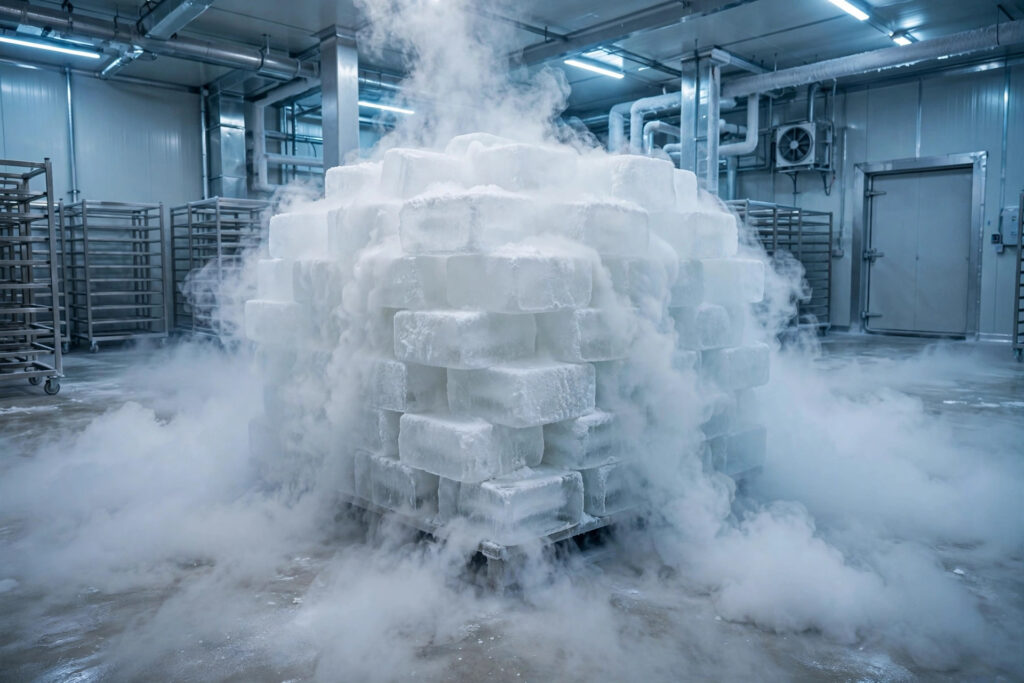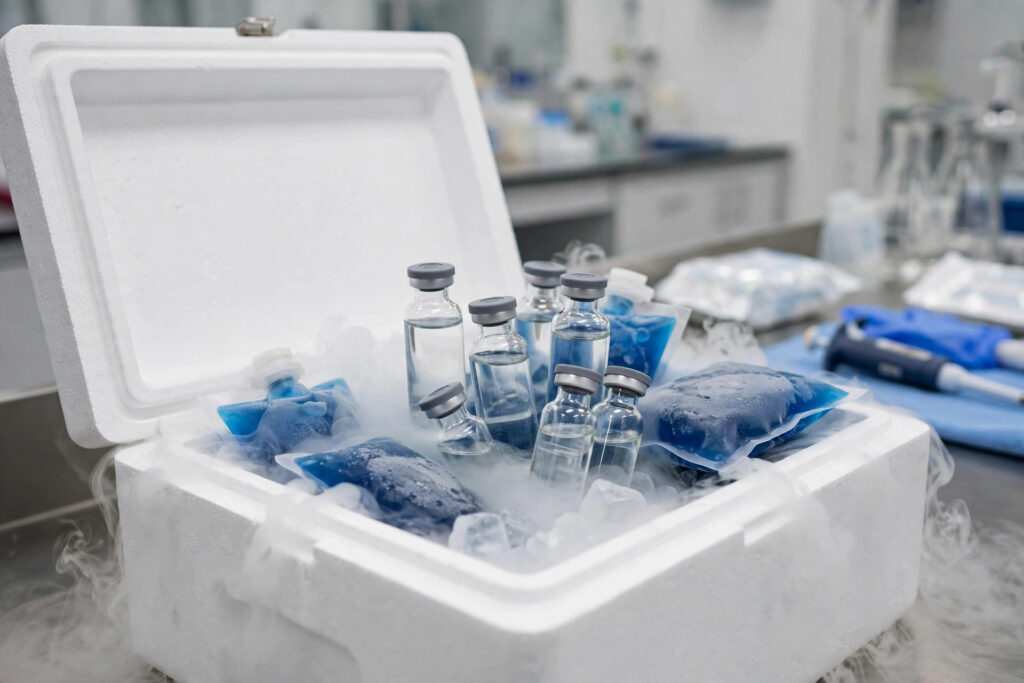
When a vaccine or medicine loses its required temperature in transit, it does not just lose potency — it can become unsafe. That is why dry ice for pharmaceuticals Pakistan is a critical link in the country’s medical cold chain, keeping frozen and deep-frozen products stable from manufacturer to hospital, even through summer heat and long intercity routes.
Why Pharma Needs Dry Ice
Many pharmaceutical products must stay frozen — typically at minus 20°C or colder — all the way to the patient. Pakistan’s ambient temperatures, frequent power cuts, and long distances between cities make this genuinely hard. Dry ice for pharmaceuticals Pakistan solves it with minus 78.5°C of dependable cold that needs no electricity, no compressors, and no moving parts — just proper packing.
What Dry Ice for Pharmaceuticals Pakistan Is Used For
Vaccines and Biologicals
Frozen vaccines, sera, and biological samples travel in insulated boxes with dry ice slices or blocks, holding deep-freeze temperatures across intercity routes.
Laboratory Specimens
Blood samples, tissue specimens, and diagnostic materials moving between collection points and central labs in Lahore, Karachi, and Islamabad rely on dry ice to stay viable.
Clinical Trial Materials
Trial sites across Pakistan receive temperature-sensitive investigational products packed with dry ice and temperature monitors.
Frozen Medicines and APIs
Certain medicines and active pharmaceutical ingredients require frozen storage throughout distribution — dry ice is the standard coolant for these lanes.
Cold Chain Best Practices With Dry Ice
Use Validated Packaging
Pharma shipments should use qualified insulated boxes — typically thick thermopore shippers — with dry ice quantities calculated for the route’s duration plus a safety margin. Never guess: a shipment that runs out of cold halfway is a total loss. Learn how to store dry ice properly to maximize its effectiveness in your packaging.
Include Temperature Monitoring
A low-cost data logger inside the box proves the cold chain held. For regulated products, this record is as important as the product itself — it is your evidence of compliance.
Separate Product From Direct Contact
Dry ice at minus 78.5°C can freeze-damage products meant only for 2–8°C refrigeration. Use barriers and buffer materials so the product experiences the right temperature band, not the raw cold of the ice.
Plan for the Weakest Link
The cold chain is only as strong as its handoffs — loading docks, courier vans, airport tarmacs. Dry ice quantities should cover the full door-to-door time including realistic delays, not just the driving hours.
Food-Grade Purity Is Non-Negotiable
For anything touching medicines, vaccines, or lab specimens, insist on dry ice manufactured from certified food-grade CO2. Industrial-grade product has no place in pharmaceutical logistics. Ask your supplier about their CO2 source — a reputable one answers clearly.
Common Pharma Cold Chain Failures (and How Dry Ice Prevents Them)
- Summer ambient heat: dry ice’s extreme cold provides a wide safety margin even at 45°C outside.
- Power cuts at storage points: unlike electric freezers, dry ice keeps working with no power at all.
- Traffic delays: properly calculated dry ice quantities absorb multi-hour delays.
- Rural last-mile delivery: where refrigeration does not exist, insulated boxes with dry ice are the entire cold chain.
Dry Ice vs Gel Packs for Pharma: When Each Wins
For frozen products (minus 20°C and below), dry ice is the clear choice — gel packs cannot reach or hold those temperatures. For refrigerated products (2–8°C), reusable gel packs are usually better and safer, since dry ice can accidentally freeze products meant only to be chilled. Many pharma distributors stock both and choose per shipment.
What to Ask Your Pharma Dry Ice Supplier
- Is your dry ice food/pharma-grade, from certified CO2?
- Can you supply on a fixed schedule (weekly/daily) with 24/7 emergency backup?
- Do you pack in qualified insulated shippers, or supply bulk for our own boxes?
- What is your lead time for Lahore, Karachi, and Islamabad dispatches?
- Can you scale up during vaccination campaigns or seasonal demand spikes?
Frequently Asked Questions
How much dry ice is needed for a pharma shipment?
It depends on box size, insulation, route duration, and ambient temperature. As a rule, calculate for the full transit time plus a 25–50% safety margin. Your supplier should help you validate the quantity — never under-pack a regulated shipment.
Can dry ice be used for 2–8°C products?
It can, but carefully — with buffering and validation. In most cases, gel packs are the safer choice for 2–8°C lanes, reserving dry ice for frozen products.
Is dry ice allowed in air cargo for pharma?
Dry ice is accepted by airlines under dangerous-goods rules (it is classified as a miscellaneous hazard due to CO2 release), with quantity limits and labeling requirements per package. Your freight forwarder handles the documentation; your job is correct packing and quantities.
Your Dry Ice for Pharmaceuticals Pakistan Partner
Pharmaceutical cold chain leaves no room for “good enough.” IceJell Pack Pakistan supplies food-grade dry ice from Manga Raiwind Road Bypass, Lahore, and Jehangir Road, Karachi — with scheduled pharma deliveries, emergency 24/7 dispatch, and proper insulated packing. Call 0321-2627965 or 03018859888 to discuss your cold chain requirement.
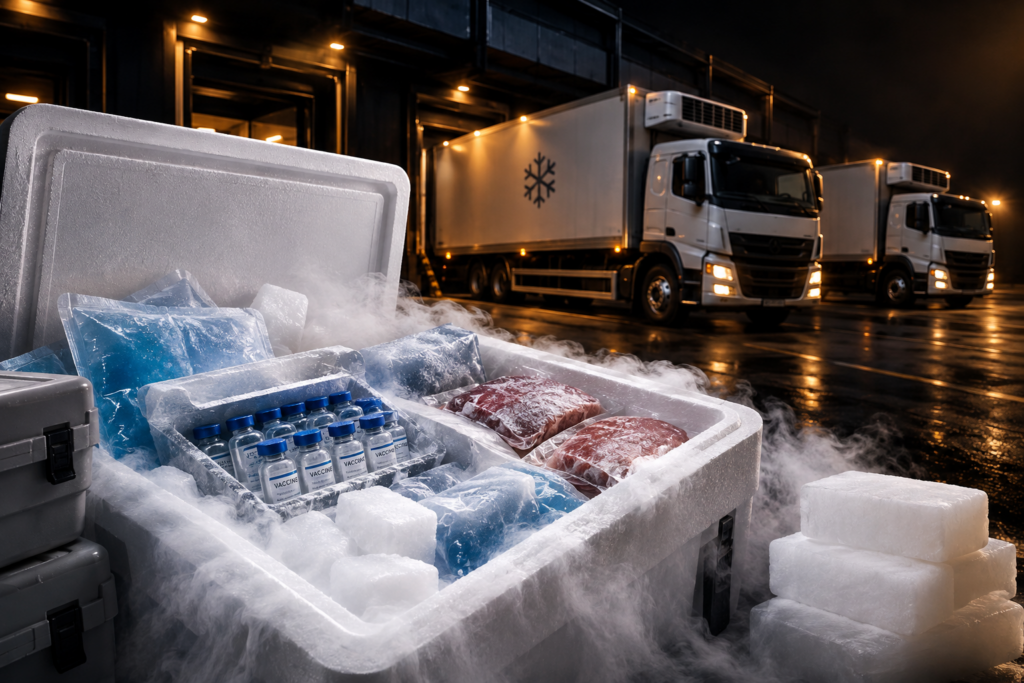
Reference: Cold chain on Wikipedia.