Transport Frozen Food Summer: The Summer Challenge
To transport frozen food summer deliveries safely in Pakistan, you need a solid plan. Pakistan’s summer is brutal for frozen food businesses. Temperatures cross 40°C in Lahore, Karachi, and Multan, and a single weak link in your packing can ruin an entire shipment.
Whether you sell frozen kebabs, parathas, ice cream, seafood, or ready-to-cook meals, safe summer transport is the difference between growth and losses.
Why Frozen Food Melts in Transit
Three enemies attack your products on the road:
- Heat – summer air warms everything it touches
- Time – traffic jams and long distances extend exposure
- Poor packing – thin boxes and weak cooling lose the battle fast
You cannot control the weather or traffic. But you CAN control your packing — and that decides the outcome.
The Right Packing Method – Step by Step
Step 1 – Freeze Products Rock Solid
Products must go into the box fully frozen, not half-frozen. A product that starts at -18°C has a huge advantage over one that starts at -5°C.
Step 2 – Choose a Thick Thermopore Box
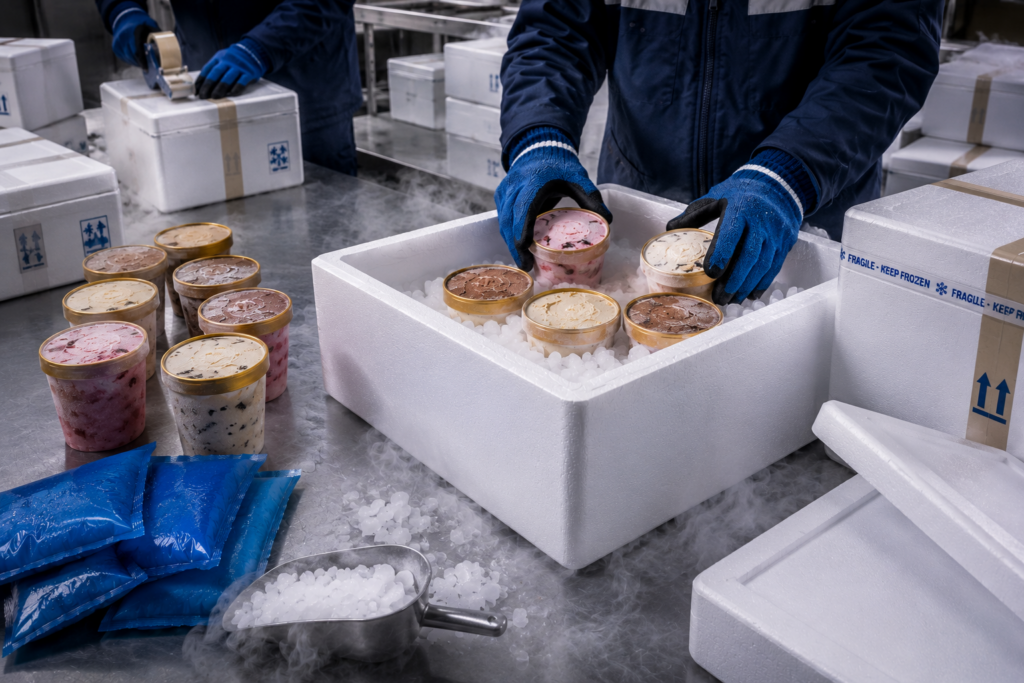
Use an insulated EPS (thermopore) box with thick walls. Match the box size to your order — too much empty space melts everything faster.
Step 3 – Add Dry Ice Correctly
- Place dry ice blocks at the bottom and on top of products
- Use 5–10 kg for a medium box on a 6–12 hour journey
- Wrap dry ice in paper or cloth so it does not touch food directly
- Never seal the box airtight — gas needs to escape
Step 4 – Fill Every Gap
Stuff empty spaces with crumpled paper, bubble wrap, or extra gel packs. Air gaps are highways for heat.
Step 5 – Seal and Label
Tape the box shut, label it “KEEP FROZEN – DO NOT DELAY,” and dispatch immediately.
Transport Frozen Food Summer: Dry Ice Is Your Best Friend
For frozen food, dry ice (-78.5°C) beats every other option:
- Keeps products frozen, not just cool
- Lasts 18–24 hours in a good box
- Leaves no water to soak packaging
- Works for intercity routes like Lahore–Karachi
Gel packs are good for chilled items and short city deliveries, but for truly frozen products on long routes, dry ice is the answer.
Timing Matters More Than You Think
- Best dispatch: 10 PM – 6 AM (coolest hours, least traffic)
- Worst dispatch: 12 PM – 4 PM (peak heat)
- Plan backwards: decide when the customer needs delivery, then schedule packing and dispatch so the journey happens in cool hours
Many successful frozen food brands in Pakistan dispatch only at night in summer. It is a simple change with dramatic results.
Transport Options Compared
- Thermopore box + dry ice: best for small/medium orders, intercity; cost low–medium
- Insulated bags + gel packs: best for city home delivery (1–3 hrs); cost low
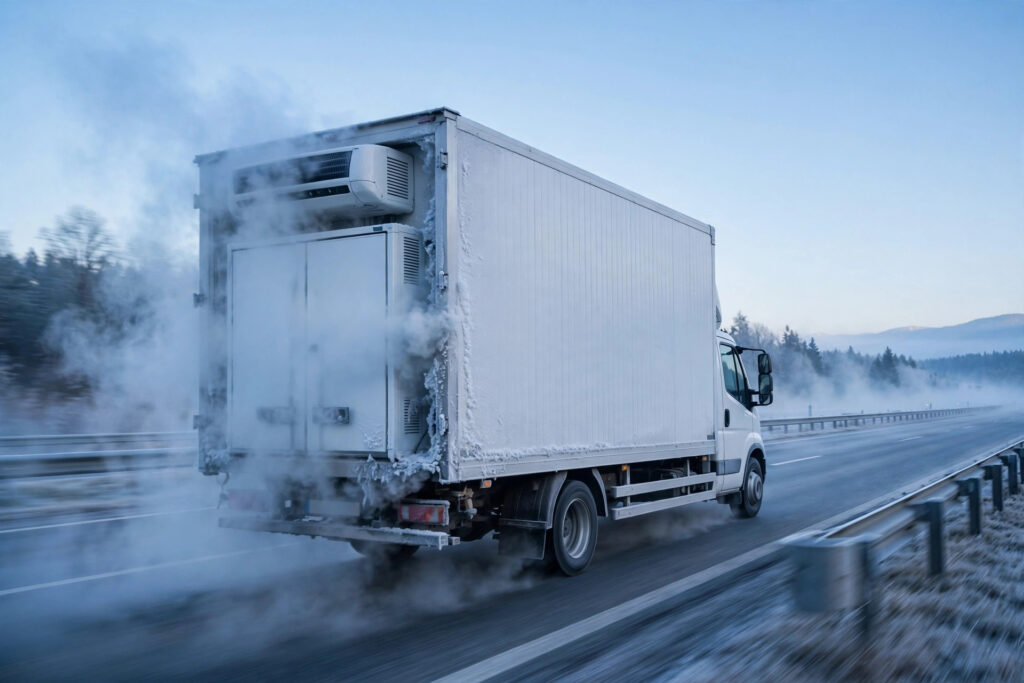
- Refrigerated truck: best for bulk distributor supply; cost high
Most small and medium businesses do perfectly well with boxes + dry ice. You do not need an expensive reefer truck to start.
Common Mistakes That Ruin Shipments
- Packing warm products – freeze fully first, no shortcuts
- Too little dry ice – when in doubt, add more
- Oversized boxes – match box to order size
- Midday dispatch – avoid peak heat
- Opening boxes in transit – every opening dumps cold air
- Reusing cracked boxes – damaged insulation fails fast
- No delivery instructions – tell riders and customers: keep frozen, do not delay
What to Tell Your Customers
A short message with every order prevents complaints: “Your order is packed with dry ice to stay frozen. Please place items in your freezer immediately on arrival. Do not touch the dry ice with bare hands.”
Educated customers are happy customers.
Costs – Is It Worth It?
Dry ice and good boxes cost money. But compare: one spoiled shipment = refund + replacement + lost customer. Proper packing = small cost per order, happy customers, repeat business.
Businesses that invest in proper summer packing consistently report fewer complaints and higher reorder rates. The maths is simple.
Get Everything in One Place
We supply the complete summer transport kit: dry ice blocks, slices, and pellets; reusable ice gel packs; insulated thermopore boxes in all sizes; packing guidance for your specific products; fast delivery across Pakistan.
For transport frozen food summer supplies, call or WhatsApp 0321-2627965 — tell us what you sell and where you deliver, and we will design the right packing kit for your route. See our dry ice supplier Pakistan guide.
Frequently Asked Questions
How much dry ice do I need per box? For a medium thermopore box (15–20 litres) on a 6–12 hour trip, 5–10 kg is typical. Longer trips need more.
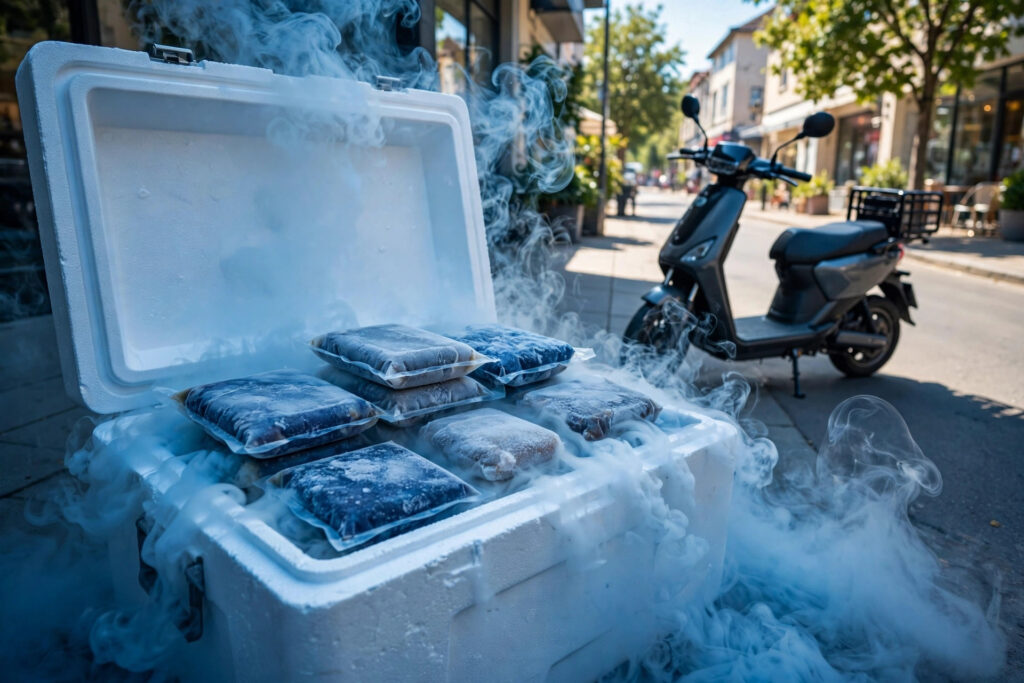
Can I transport frozen food on a bike in summer? Yes, for short city deliveries (under 2 hours): use an insulated bag with frozen gel packs and dispatch in cooler hours.
Is dry ice safe with food? Yes, food-grade dry ice is safe. Just keep it from touching food directly — wrap it in paper or cloth.
What if delivery is delayed? Extra dry ice is your insurance. Packing for 12 hours when the trip takes 8 gives you a safety margin.