What Is Cold Chain Logistics?
Cold chain logistics means keeping products at a controlled low temperature from the factory all the way to the customer. Every step — storage, packing, transport, and delivery — must stay cold. If the chain breaks even once, the product can spoil. Learn more about the cold chain on Wikipedia.
In Pakistan, where summer temperatures cross 45°C in many cities, a strong cold chain is not a luxury. It is a necessity for food safety, medicine quality, and business reputation.
Why Cold Chain Matters in Pakistan
Food Safety
Milk, meat, fish, ice cream, and frozen foods spoil quickly in heat. A broken cold chain can cause food poisoning and huge financial losses.
Medicine Quality
Vaccines, insulin, blood samples, and many medicines lose their effect if they get warm. For hospitals and pharmacies, cold chain failure is a health risk.
Export Business
Pakistan exports mangoes, seafood, meat, and frozen foods. International buyers reject shipments that arrive warm. A proper cold chain opens the door to export markets.
E-commerce Growth
Online grocery and food delivery are growing fast in Lahore, Karachi, and Islamabad. Customers expect frozen items to arrive frozen — and they leave bad reviews when they don’t.
How Cold Chain Logistics Works – Step by Step
1. Cold Storage
Products are stored in refrigerated warehouses at the right temperature — frozen foods at -18°C, dairy at 2–4°C, and so on.
2. Cold Packing
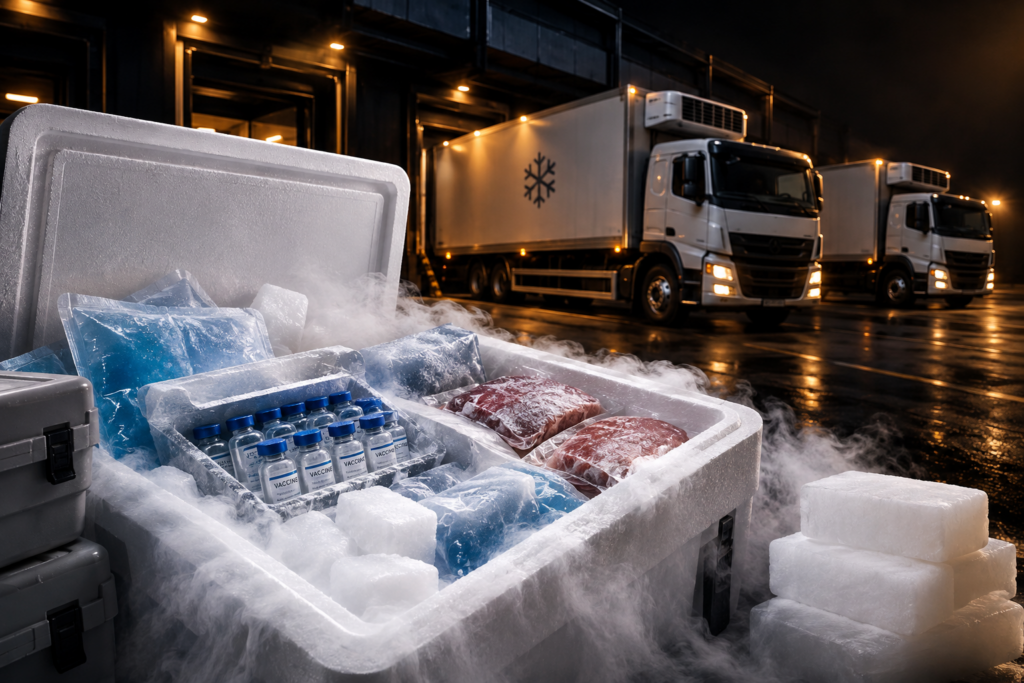
Products are packed with cooling materials: dry ice, ice gel packs, or both, inside insulated thermopore boxes. The packing must match the journey length and weather.
3. Refrigerated Transport
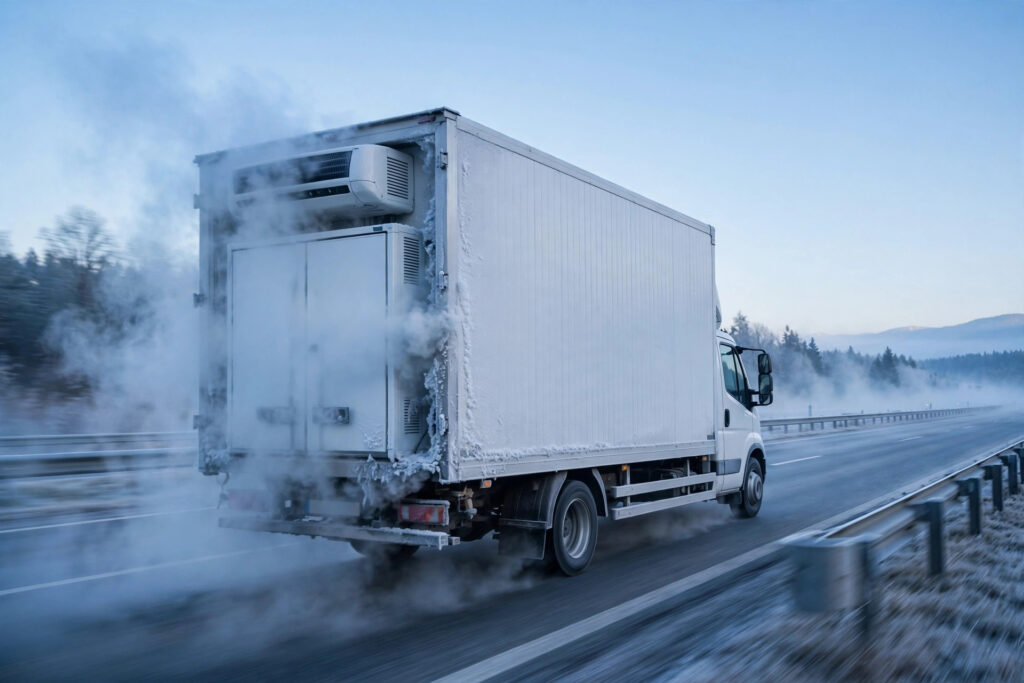
Goods move in refrigerated trucks or insulated vehicles. For smaller shipments, insulated boxes with dry ice do the job without a full reefer truck.
4. Last-Mile Delivery
The final delivery to shops or homes is the hardest part. Delivery riders need insulated bags or boxes with gel packs to keep items cold in traffic and heat.
5. Monitoring
Modern cold chains use temperature loggers to prove the product stayed cold the whole way. This builds trust with buyers and meets export rules.
Common Cold Chain Problems in Pakistan
- Power cuts – load shedding can warm up cold storage if there is no backup
- Long distances – Karachi to Peshawar is a long, hot journey
- Poor packing – thin boxes and weak ice packs melt too fast
- No temperature checks – many transporters never measure temperature
- Untrained staff – handlers who leave freezer doors open or delay loading
Solutions That Actually Work
Use Dry Ice for Long Routes
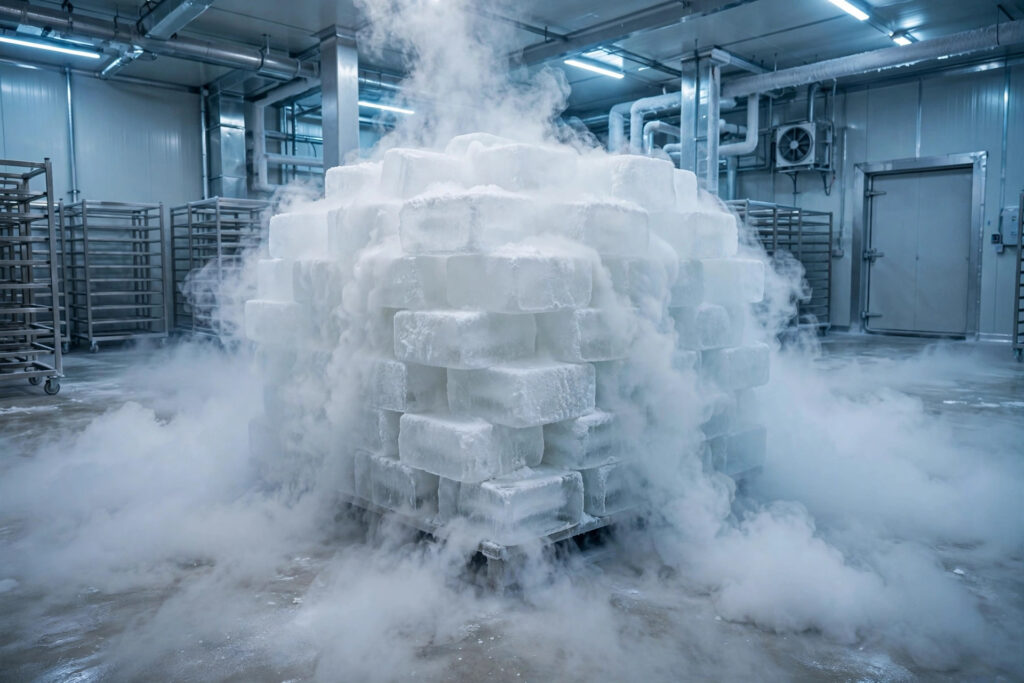
Dry ice at -78.5°C keeps products frozen far longer than normal ice. For intercity transport, it is the most reliable option.
Use Reusable Ice Gel Packs
Gel packs stay cold longer than water ice and do not leak. They are perfect for dairy, vaccines, and last-mile delivery.
Invest in Insulated Packing
Thick thermopore (EPS) boxes make a huge difference. A good box can double the cold life of your ice or gel packs.
Plan Dispatch Times
Dispatching at night or early morning avoids the worst heat and traffic delays.
Work With Cold Chain Specialists
Instead of building everything yourself, partner with a supplier who provides dry ice, gel packs, boxes, and refrigerated transport as one package.
Cold Chain for Different Industries
- Dairy and ice cream: Gel packs + thermopore boxes for city delivery; dry ice for intercity.
- Meat and seafood: Dry ice blocks for long routes; gel packs for retail packing.
- Pharma and vaccines: Validated insulated boxes with gel packs and temperature loggers.
- Fruits and exports: Pre-cooling + refrigerated transport + proper ventilation.
Cost of Cold Chain vs Cost of Spoilage
Many businesses avoid cold chain because it seems expensive. But one spoiled shipment can cost more than months of proper cold packing. Lost customers and bad reviews cost even more. In reality, dry ice and gel packs are a small price for protecting your products.
How We Help
We provide end-to-end cold chain supplies across Pakistan: dry ice blocks, slices, and 3mm pellets; reusable ice gel packs in all sizes; insulated thermopore boxes; refrigerated transport guidance; fast delivery to Punjab, Sindh, KPK, and Balochistan. For specs and bulk pricing, see our 3mm dry ice pellets guide.
Call or WhatsApp 0321-2627965 to discuss your cold chain needs — we will design the right packing for your products and routes.
Frequently Asked Questions
What is the cheapest way to maintain cold chain for small businesses? Insulated thermopore boxes with ice gel packs. It needs no expensive equipment and works for city deliveries.
How do I transport frozen food from Lahore to Karachi? Use dry ice blocks inside thick thermopore boxes, dispatched at night. For large volumes, use a refrigerated truck.
Can I use normal ice instead of dry ice? Normal ice melts into water and only reaches 0°C. Dry ice stays at -78.5°C and leaves no water. For frozen products, dry ice is far better.
Do you provide cold chain for medicines? Yes. We supply gel packs and insulated boxes designed for pharma transport, with guidance on packing methods.